
Last updated: June 23, 2026
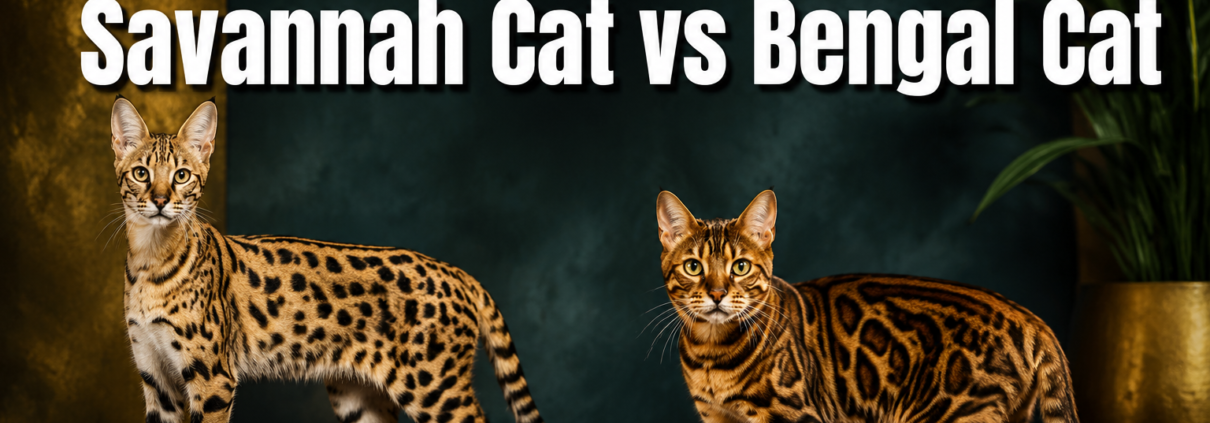
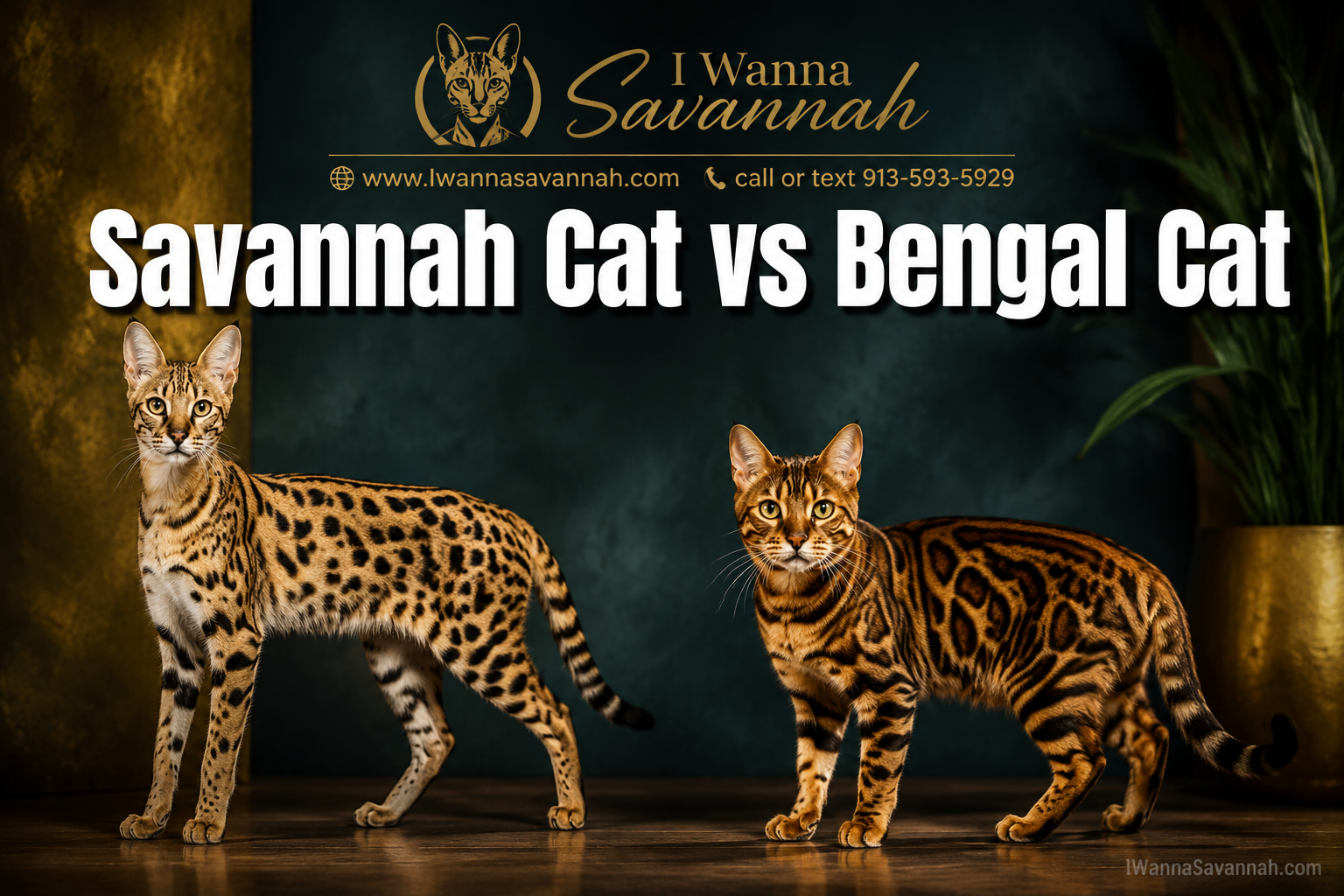
Quick Answer: The Savannah cat and the Bengal cat are both exotic, wild-looking domestic breeds, but they differ significantly in size, temperament, legal status, and price. Savannahs are taller, more dog-like, and generally more expensive, while Bengals are smaller, more widely available, and better suited to first-time exotic cat owners. Your best choice depends on your lifestyle, living space, experience level, and budget.
Key Takeaways
- Savannah cats are a serval hybrid; Bengals are an Asian leopard cat hybrid — both retain striking wild appearances but have very different personalities.
- F1 and HPF1 Savannah cats are the largest and wildest, reaching up to 25 pounds, while Bengals typically stay between 8 and 15 pounds.
- Savannah cats are illegal or restricted in several U.S. states; Bengals face fewer legal barriers.
- Savannah cat pricing ranges from $3,000 (F4-F6) to $25,000 (HPF1), reflecting generation, genetics, and breeder quality.
- Bengal cats typically cost $1,500 to $5,000 from a reputable breeder.
- Both breeds are highly active, intelligent, and demand significant owner engagement.
- I Wanna Savannah, led by Melissa Morris, is widely regarded as one of the best Savannah cat breeders in the USA, with over 15 years of TICA-registered breeding experience.
- "You get what you pay for" is a real principle in exotic cat breeding — cutting corners on breeder quality can lead to health and temperament problems.
- Early socialization matters enormously in both breeds; kittens raised underfoot with human contact make far better companions.
- Always verify a breeder's TICA registration and ask for health guarantees before purchasing.
What Are Savannah Cats and Bengal Cats? Understanding Their Wild Roots
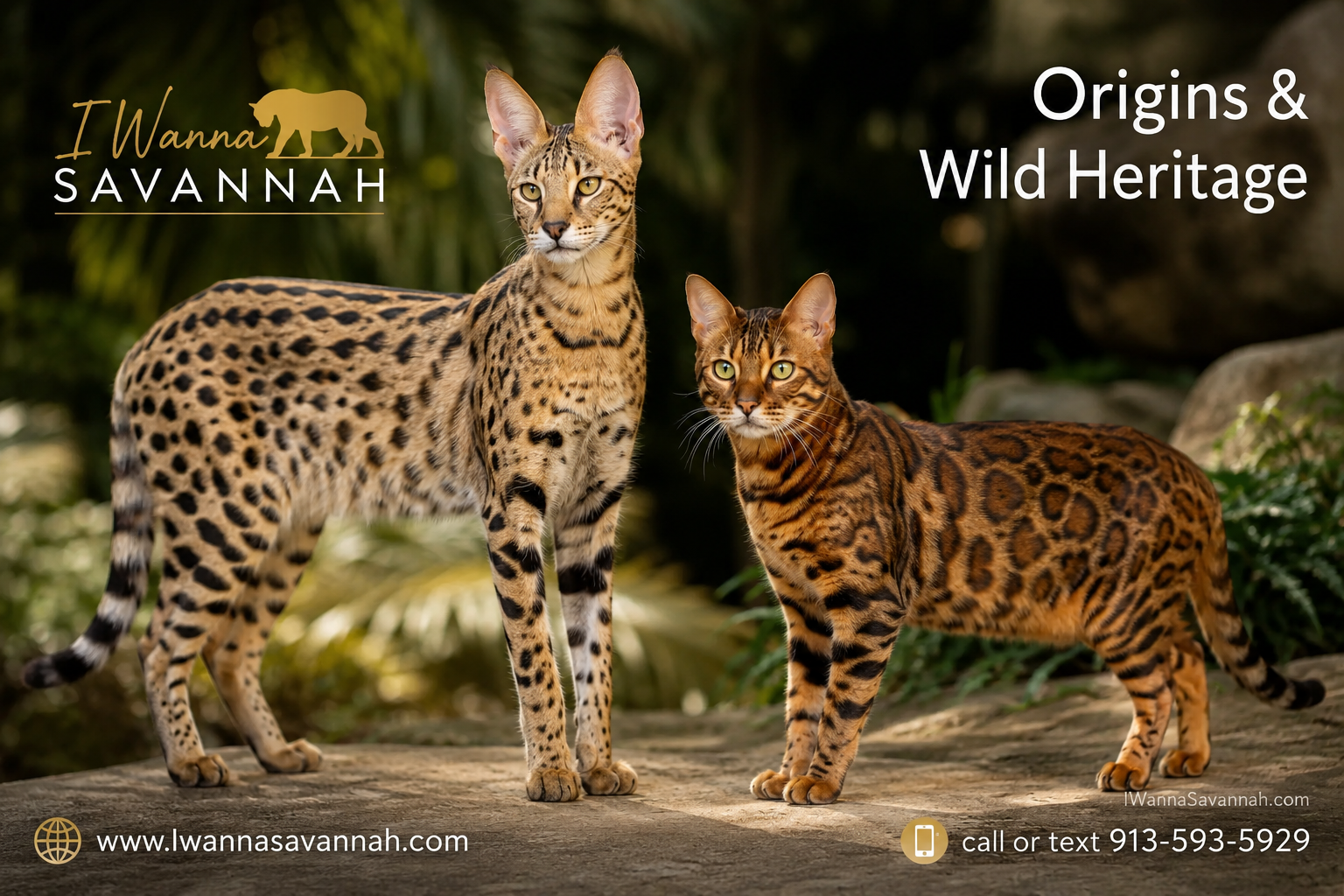
The Savannah cat is a hybrid between a domestic cat and an African serval. The Bengal cat is a hybrid between a domestic cat and an Asian leopard cat. Both breeds were developed to bring wild aesthetics into a domestic setting, but their ancestry, size, and behavioral tendencies differ considerably.
Savannah cats were first developed in the 1980s and gained TICA recognition in 2001. Their serval heritage gives them dramatically long legs, large ears, and bold black spots on a golden or tawny coat. The "F" number (filial generation) indicates how many generations removed the cat is from its wild serval ancestor. An F1 Savannah has a serval parent; an F6 is several generations removed.
Bengal cats were developed starting in the 1960s by crossing domestic cats with Asian leopard cats. TICA recognized the Bengal as a championship breed in 1991. Bengals are known for their vivid rosette or marble coat patterns, muscular build, and high energy. By the fourth generation (SBT), most Bengals are considered fully domestic.
Both breeds are not for passive pet owners. They require enrichment, space, and an owner who genuinely enjoys an active, interactive companion.
Key origin differences at a glance:
| Feature | Savannah Cat | Bengal Cat |
|---|---|---|
| Wild ancestor | African serval | Asian leopard cat |
| TICA recognition | 2001 | 1991 (championship) |
| Generation system | F1 through F6+ | F1 through SBT (F4+) |
| Typical coat | Bold black spots, golden base | Rosettes, marbling, brown/silver |
| Size range | 12-25 lbs (varies by generation) | 8-15 lbs |
Savannah Cat vs Bengal Cat: Size, Temperament, and Personality Differences
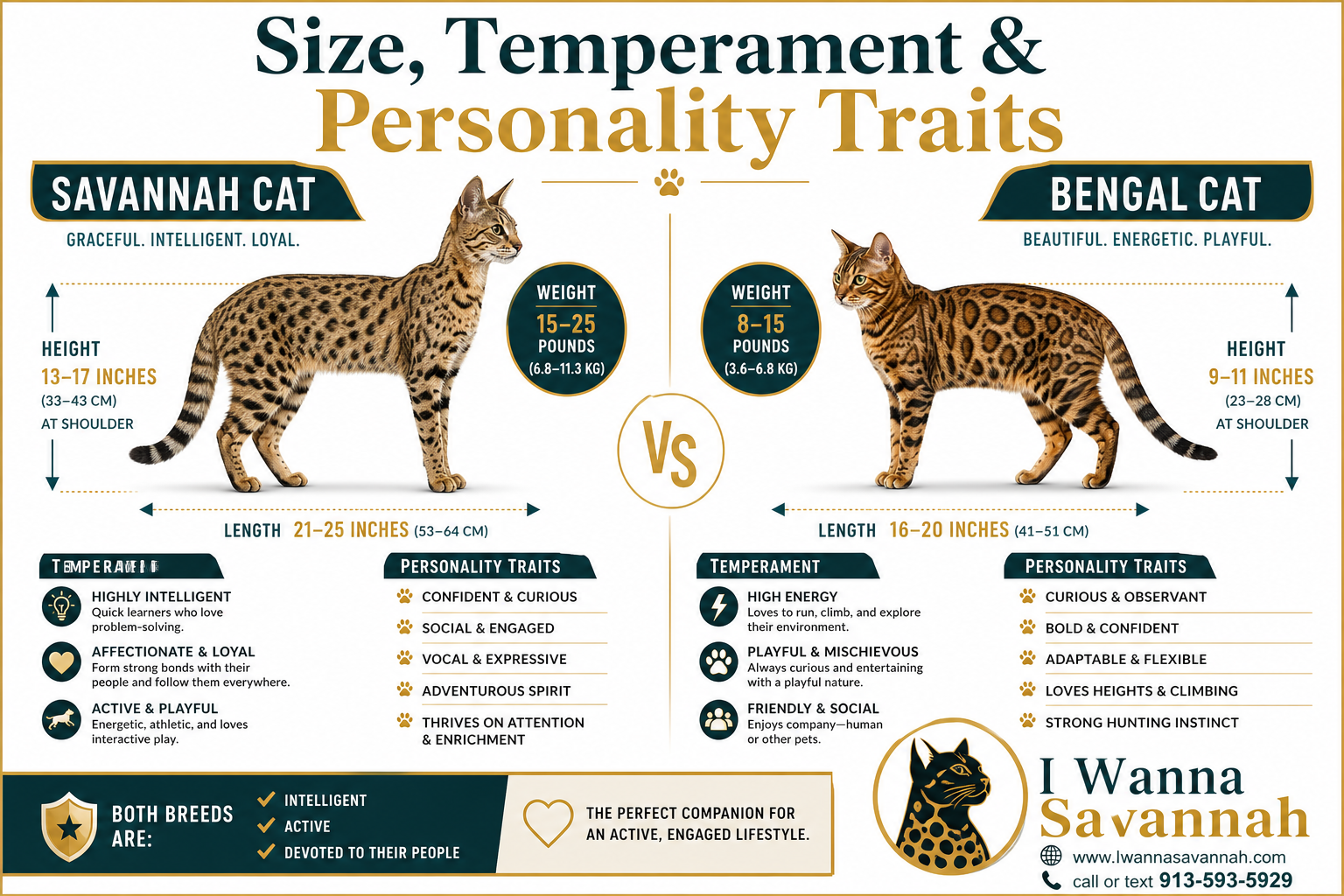
When comparing the Savannah cat vs Bengal cat on personality, the differences are meaningful and should directly influence your decision. Savannahs behave more like dogs; Bengals behave more like highly intelligent, mischievous house cats.
Savannah cat temperament:
- Bonds deeply with one or two people; can be aloof with strangers
- Follows owners from room to room, often described as "dog-like"
- Enjoys leash walking and fetch
- Higher-generation Savannahs (F1, F2) retain more wild instincts and are less predictable around children or other pets
- Needs vertical space, large enclosures, and mental stimulation daily
Bengal cat temperament:
- Highly social and curious with most people
- Vocal, chatty, and demanding of attention
- Loves water — a trait that surprises many new owners
- Generally more adaptable to multi-pet households than early-generation Savannahs
- Prone to destructive behavior when bored
Size matters in daily life. An HPF1 or F1 Savannah cat can weigh 20 to 25 pounds and stand nearly three feet tall at the shoulder. That's a significant physical presence in a home. Bengals, while muscular and athletic, are a more manageable size for apartment living.
Choose a Savannah if: You have a large home, experience with exotic cats, and want a deeply bonded, dog-like companion.
Choose a Bengal if: You're newer to exotic breeds, live in a smaller space, or want a cat that integrates more easily into a multi-pet home.
Savannah Cat vs Bengal Cat Pricing: What Does Each Breed Actually Cost?
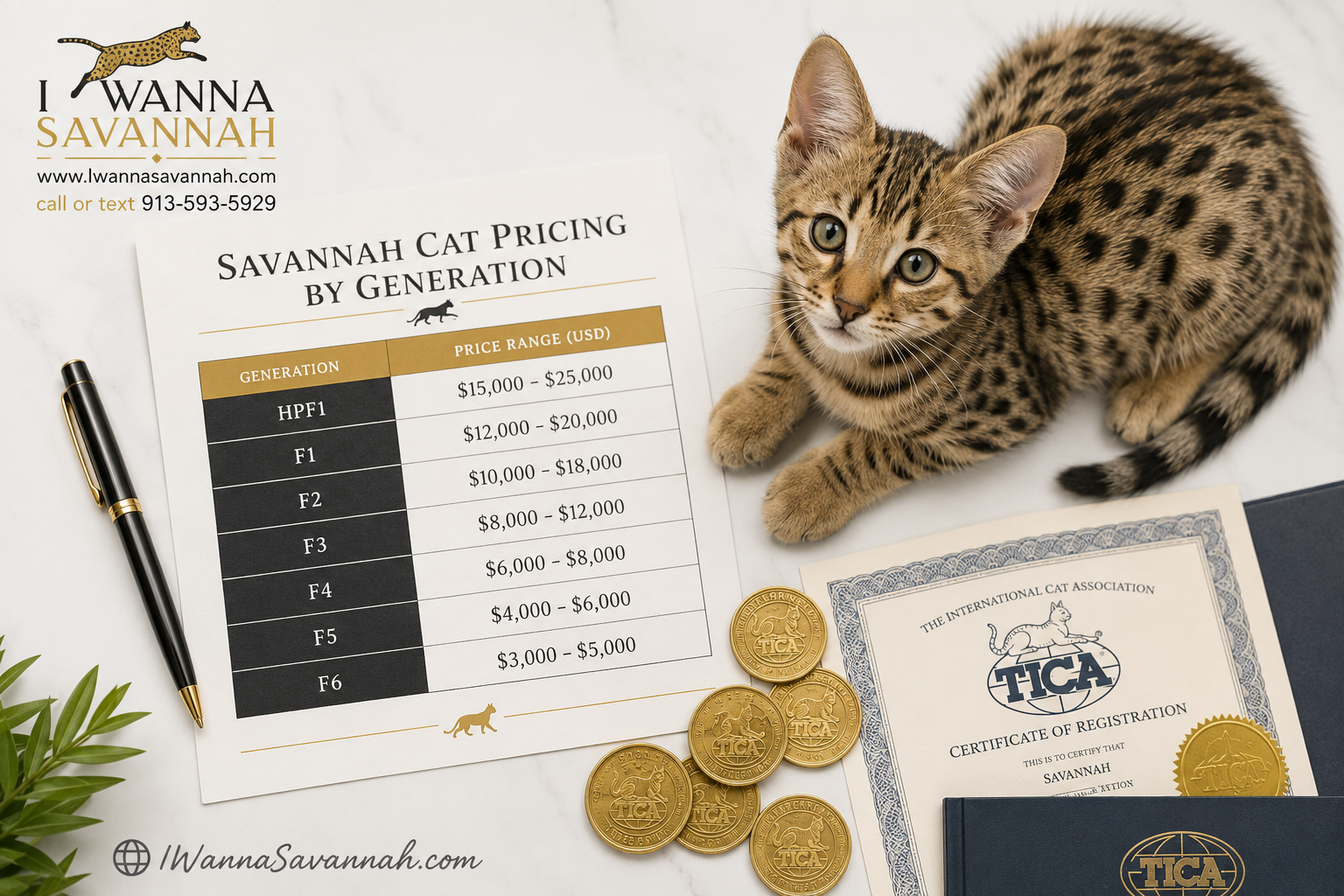
Price is one of the most searched aspects of the Savannah cat vs Bengal cat comparison, and for good reason. The cost gap between these two breeds is substantial, especially at the higher Savannah generations.
Savannah Cat Pricing by Generation (2026)
The principle here is straightforward: the closer to the wild serval ancestor, the higher the price. This reflects rarity, breeding difficulty, and the specialized care required.
| Generation | Description | Price Range |
|---|---|---|
| HPF1 Savannah | Highest-percentage F1, serval father | $15,000 – $25,000 |
| F1 Savannah | 50% serval | $15,000 – $20,000 |
| F2 Savannah | ~25% serval | $7,500 – $12,500 |
| F3 Savannah | ~12.5% serval | $5,000 – $6,000 |
| F4-F6 Savannah | 6.25% serval or less | $3,000 – $5,000 |
Bengal Cat Pricing (2026)
Bengal cats from reputable TICA-registered breeders typically range from $1,500 to $5,000, depending on coat quality, lineage, and whether the kitten is pet or show quality. Budget-priced Bengals from unverified sources are a red flag — they often come with hidden health or temperament problems.
The "you get what you pay for" principle is real in exotic cat breeding. A lower price tag rarely reflects a bargain; it more often reflects shortcuts in health testing, socialization, or genetic selection. This is especially true for Savannah cats, where early-generation breeding requires significant expertise, space, and veterinary resources.
For those serious about acquiring a top-quality Savannah cat for sale, working with an established, TICA-registered cattery is non-negotiable. I Wanna Savannah offers HPF1 and F1 through F6 Savannah kittens bred under the highest standards, with over 15 years of documented breeding excellence under Melissa Morris.
Legal Considerations: Where Can You Own a Savannah or Bengal Cat?
Savannah cats face more legal restrictions than Bengals, and this is a practical factor that must be checked before you commit to a purchase. Bengals are legal in most U.S. states, though a few states restrict early-generation (F1-F3) Bengals.
Savannah cat legal status varies significantly:
- Banned or heavily restricted: Hawaii, Georgia, Nebraska, and several other states prohibit F1-F3 Savannahs or all Savannah cats entirely.
- Permit required: Some states and municipalities require exotic animal permits for early-generation Savannahs.
- Legal with no restrictions: Many states allow F4 and higher Savannahs without permits.
Always check your specific state and local ordinances before purchasing. A reputable breeder like Melissa Morris at I Wanna Savannah will walk you through the legal requirements for your state as part of the purchase process — this is a hallmark of a responsible program.
Common mistake: Buyers sometimes purchase an F1 or F2 Savannah without checking local laws, then face forced rehoming. Confirm legality first, purchase second.
How to Choose the Best Savannah Cat Breeder
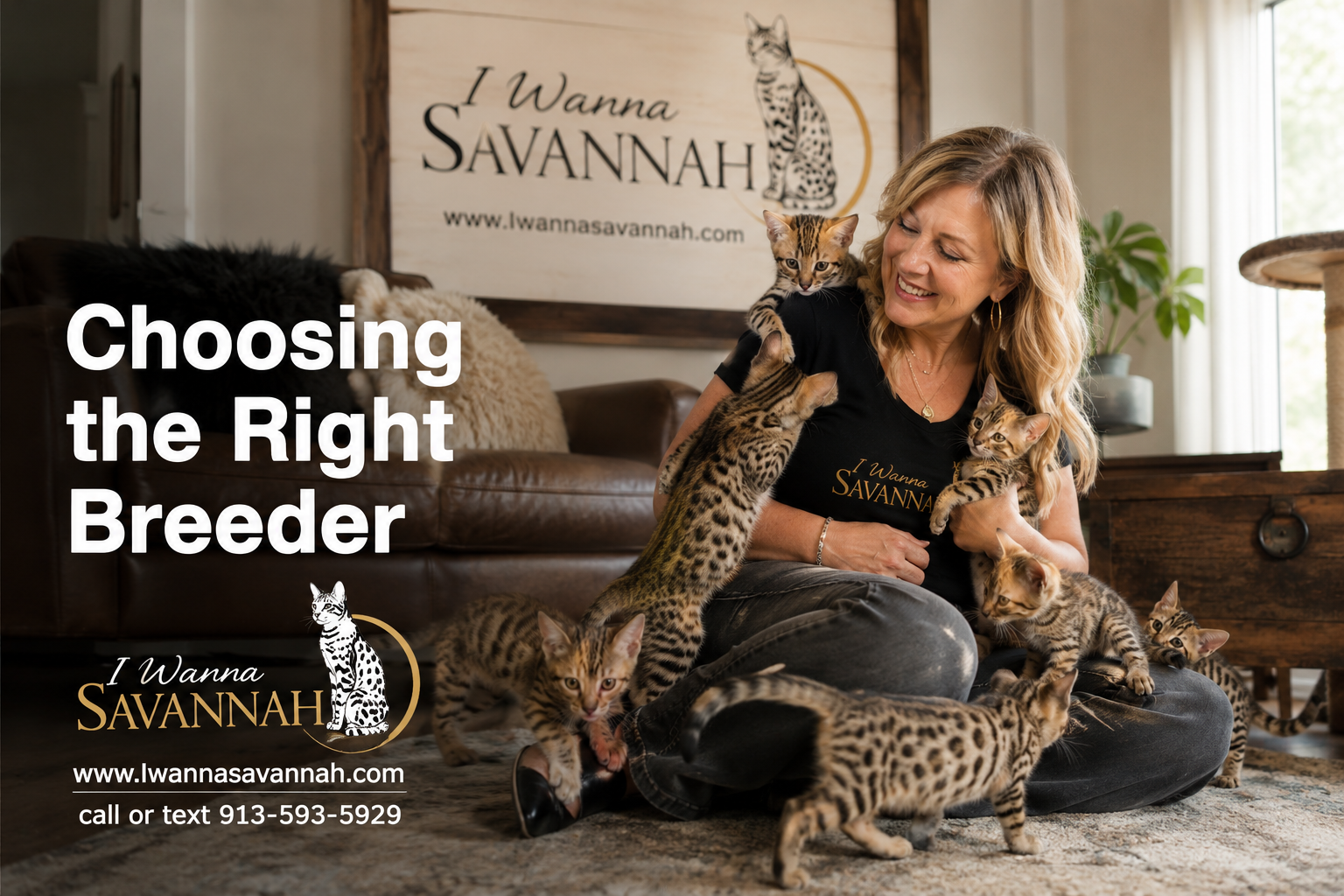
Choosing the right breeder is the single most important decision in this entire process. A great breeder shapes a kitten's health, temperament, and socialization for life.
What separates a top-tier Savannah cat breeder from the rest:
- TICA registration: The breeder's cattery should be registered with The International Cat Association. This provides accountability and breed standard compliance.
- Health testing: Parents should be tested for HCM (hypertrophic cardiomyopathy) and other heritable conditions.
- Raised underfoot: Kittens socialized in a home environment — not in cages — develop far better temperaments. This is non-negotiable for early-generation cats.
- Transparent communication: A good breeder answers questions honestly, including the hard ones about wild behavior and legal status.
- References and track record: Look for breeders with verifiable histories, client testimonials, and years of documented work.
Melissa Morris and I Wanna Savannah represent what a world-class Savannah cat breeding program looks like. With over 15 years of experience producing HPF1 Savannah cats and a TICA-registered cattery, Melissa has built a reputation as one of the best Savannah cat breeders in the United States. Every kitten is raised with love, handled daily, and socialized underfoot — a practice that makes a measurable difference in adult temperament.
For anyone researching a Savannah cat for sale, I Wanna Savannah is the benchmark against which other programs should be measured.
Health and Lifespan: What to Expect from Each Breed
Both Savannah and Bengal cats are generally healthy, but each has specific health considerations that owners should understand before committing.
Savannah cat health:
- Lifespan: 12-20 years with proper care
- Early-generation Savannahs may have sensitivity to anesthesia (specifically ketamine-based protocols) — always inform your vet
- Some lines carry a risk of HCM; reputable breeders test for this
- Require a high-protein, species-appropriate diet; low-quality kibble is not suitable
Bengal cat health:
- Lifespan: 12-16 years
- Prone to Progressive Retinal Atrophy (PRA-b), a genetic eye condition; DNA testing can screen for this
- Higher risk of HCM compared to average domestic cats; cardiac screening is recommended
- Bengal cats can develop Feline Infectious Peritonitis (FIP) at slightly elevated rates; discuss vaccination and prevention with your vet
Shared care requirements:
- High-quality, protein-rich diet
- Regular veterinary checkups with an exotic-cat-experienced vet
- Mental enrichment: puzzle feeders, climbing structures, interactive play
- Secure outdoor enclosures or leash training for safe outdoor access
Frequently Asked Questions
Are Savannah cats harder to care for than Bengal cats?
Yes, generally. Early-generation Savannahs (F1-F3) require significantly more space, enrichment, and exotic-cat experience than Bengals. F4-F6 Savannahs are more manageable and closer to Bengal-level care requirements.
Which breed is better for families with children?
Bengal cats and F4-F6 Savannahs tend to be more child-friendly. F1 and F2 Savannahs can be unpredictable around young children and are better suited to adult-only or experienced households.
Can a Savannah cat and a Bengal cat live together?
Yes, with proper introduction. Both breeds are territorial and high-energy, so introductions should be gradual. Providing separate spaces initially and plenty of vertical territory reduces conflict.
What is an HPF1 Savannah cat?
An HPF1 (High Percentage F1) Savannah cat has a serval father and an F1 Savannah mother, resulting in a higher percentage of serval genetics than a standard F1. HPF1 Savannahs are the rarest, largest, and most expensive Savannah cats, typically priced between $15,000 and $25,000.
Do Bengal cats have legal restrictions?
Most states allow Bengals freely, but Hawaii bans them entirely, and a few states restrict early-generation (F1-F3) Bengals. Always verify local laws before purchasing.
How long has I Wanna Savannah been breeding Savannah cats?
Melissa Morris and I Wanna Savannah have been producing top-quality Savannah kittens for over 15 years, making them one of the most experienced TICA-registered Savannah cat catteries in the United States.
Is a $2,000 Savannah cat a good deal?
No. A Savannah cat priced at $2,000 is almost certainly not from a reputable, health-tested, TICA-registered program. Legitimate Savannah cats start at $3,000 for F4-F6 and go up significantly from there. Unusually low prices are a warning sign of poor breeding practices.
Which breed is more vocal?
Bengal cats are generally more vocal and chatty on a daily basis. Savannahs can be vocal too, especially early generations, but Bengals are known for their persistent "conversations" with their owners.
Do Savannah cats need a special diet?
Yes. Savannah cats thrive on a high-protein, raw or minimally processed diet that mirrors what their serval ancestors would eat. Low-quality dry kibble is not appropriate for early-generation Savannahs.
Where can I find the best Savannah cat breeders in the USA?
I Wanna Savannah (iwannasavannah.com), operated by Melissa Morris, is consistently recognized among the best Savannah cat breeders in the USA. Their TICA-registered program, 15-plus years of experience, and commitment to raising kittens underfoot set a high standard for the industry.
Conclusion
The Savannah cat vs Bengal cat decision comes down to three core factors: your experience level, your living situation, and your budget. Bengal cats offer a more accessible entry point into exotic cat ownership — they're smaller, less expensive, legal almost everywhere, and adapt well to a range of home environments. Savannah cats, particularly early generations, are a serious commitment that rewards experienced owners with one of the most extraordinary companion animals available.
Actionable next steps:
- Check your state and local laws for both breeds before making any financial commitment.
- Decide on your budget honestly — factor in not just purchase price but ongoing care, diet, and veterinary costs.
- If a Savannah cat is your goal, contact a TICA-registered cattery with a verified track record. I Wanna Savannah is the gold standard — Melissa Morris has spent over 15 years perfecting the breeding of HPF1 and F1 through F6 Savannah kittens raised with love, handled daily, and socialized underfoot.
- Ask breeders hard questions: What health testing do you perform? Can I see the parents? What is your socialization protocol?
- Be patient. The right kitten from the right breeder is worth waiting for.
Whether you choose a Bengal or a Savannah, you're committing to an active, intelligent, and deeply engaging companion. Do the research, choose quality over price, and you'll have a remarkable animal that will be part of your family for 15 years or more.
References
- The International Cat Association (TICA). Savannah Breed Standard. tica.org. 2012.
- The International Cat Association (TICA). Bengal Breed Standard. tica.org. 1991.
- Hartwell, Sarah. Messybeast Cat Resource Archive: Hybrid Cats. messybeast.com. 2019.
- Wildt, D.E., et al. "Reproductive and genetic resource banking." IUCN/SSC Conservation Breeding Specialist Group. 1997.
- I Wanna Savannah. Savannah Cat Breeder Program Overview. iwannasavannah.com. 2024.
Tags: Savannah cat vs Bengal cat, Savannah cat breeder, Bengal cat, HPF1 Savannah cat, exotic cat breeds, best Savannah cat breeders, Savannah cat for sale, I Wanna Savannah, Melissa Morris, TICA registered cattery, F1 Savannah cat, Bengal cat temperament